This is a brief overview of how we achieved historic performance, increased brand image and streamlined production pipeline efficiency.
Category:
Performance marketing
Location:
Remote, Manchester, London
How we tested content, found success and iterade on that.
Our approach to marketing was relatively simple: understand what problems each product solved and speak directly to those problems. Thanks to the fact that we had 5-7 products at any given time, all solving different issues, we were able to lend and borrow learnings from each account, which resulted in an unending source of functional ideas to test.
Optimizing for hook rate, hold rate, outbound CTR, CPA and ROAS in that order, we developed an approach to content that resulted in several million pounds of product being moved at a profit. Given the short-lived nature of performance marketing creative on social media, we also had the chance to learn new lessons on a weekly basis.
Grabbing attention.
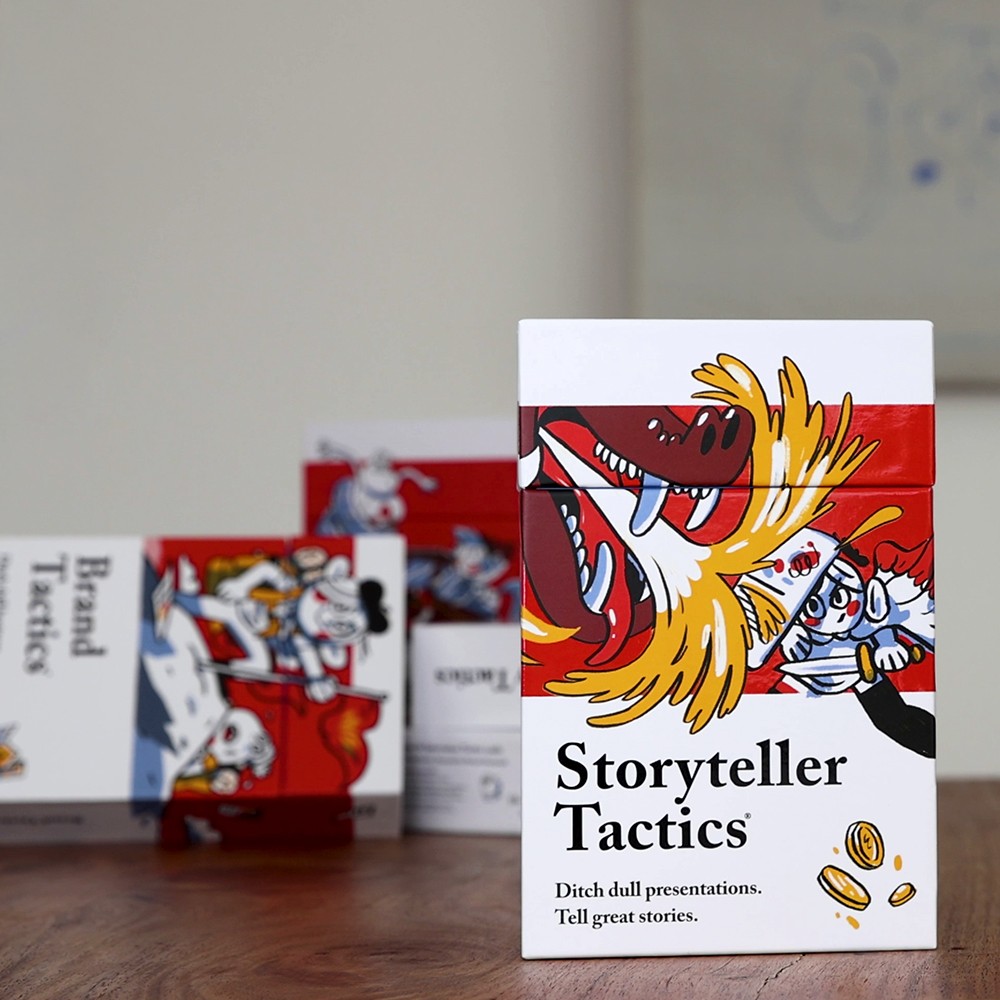
For a video to perform the first thing it needs to do is grab attention, i.e. have someone stay for more than 3 seconds. One of the many ways to do this was speaking to the target audience's fears and anxieties (e.g. how to avoid being a bad manager, how to not bore an audience).
The biggest hurdle when making content is overcomplicating it. While the art of a visual hook is extremely valuable (such as my request to talent to begin by holding odd items up to the camera), what's even more important is having your first 5 words clearly addressing the viewer's self-assigned identity and the issue that they might be facing. The trick wasn't to overthink it, especially at the high cadence we were working at, but to be clear and direct. You can lull them after you've gotten past their initial discernment.
A guerrilla approach to ads.
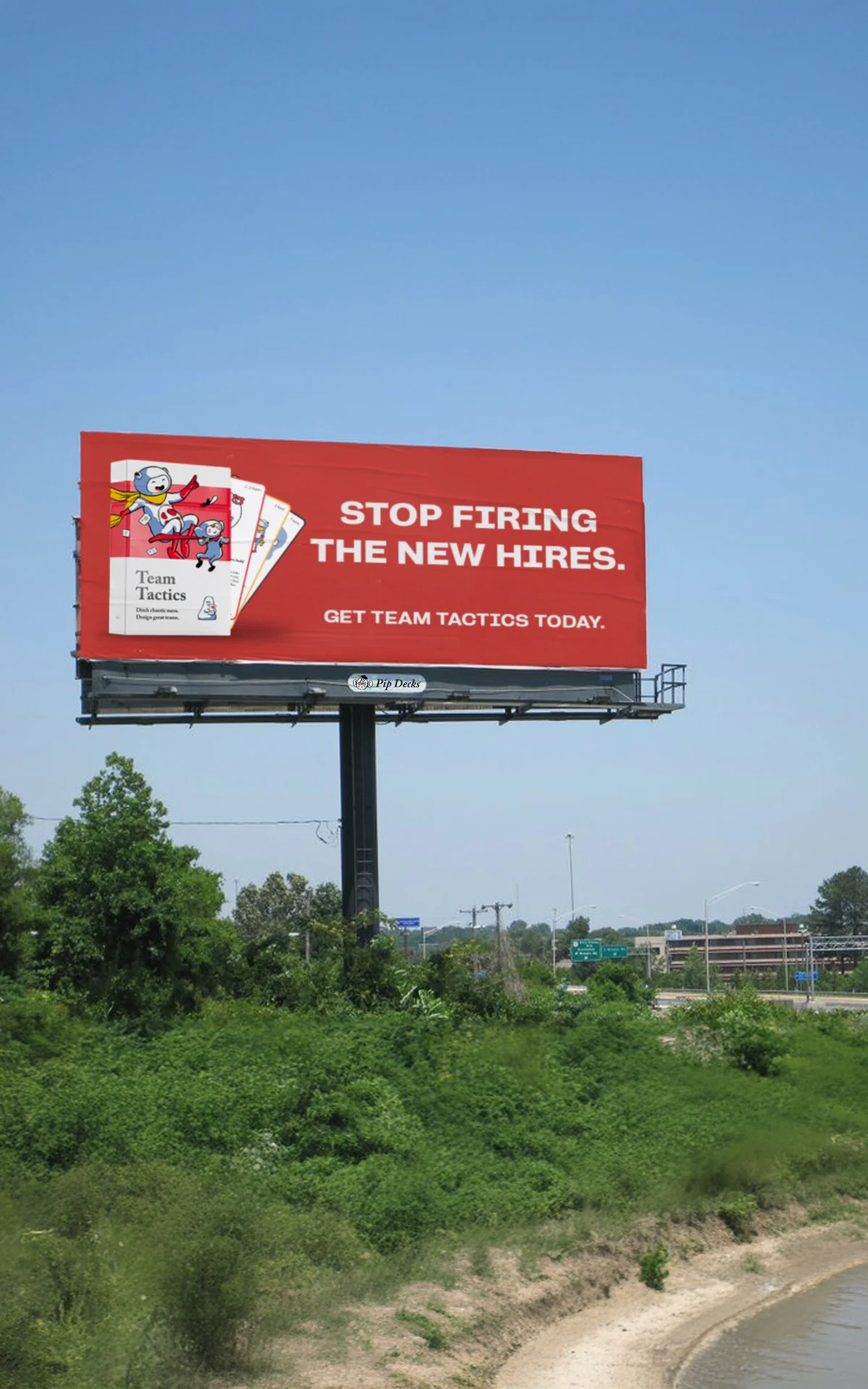
The nature of paid content requires testing. While regular talking-head content is a proven formula with plenty of room to experiement, the name of the game is pattern interruption. This means that, sometimes, you've got to break out of the box with more experimental types of creative, which spans video, statics, carousels and whatever you can get your hands into.
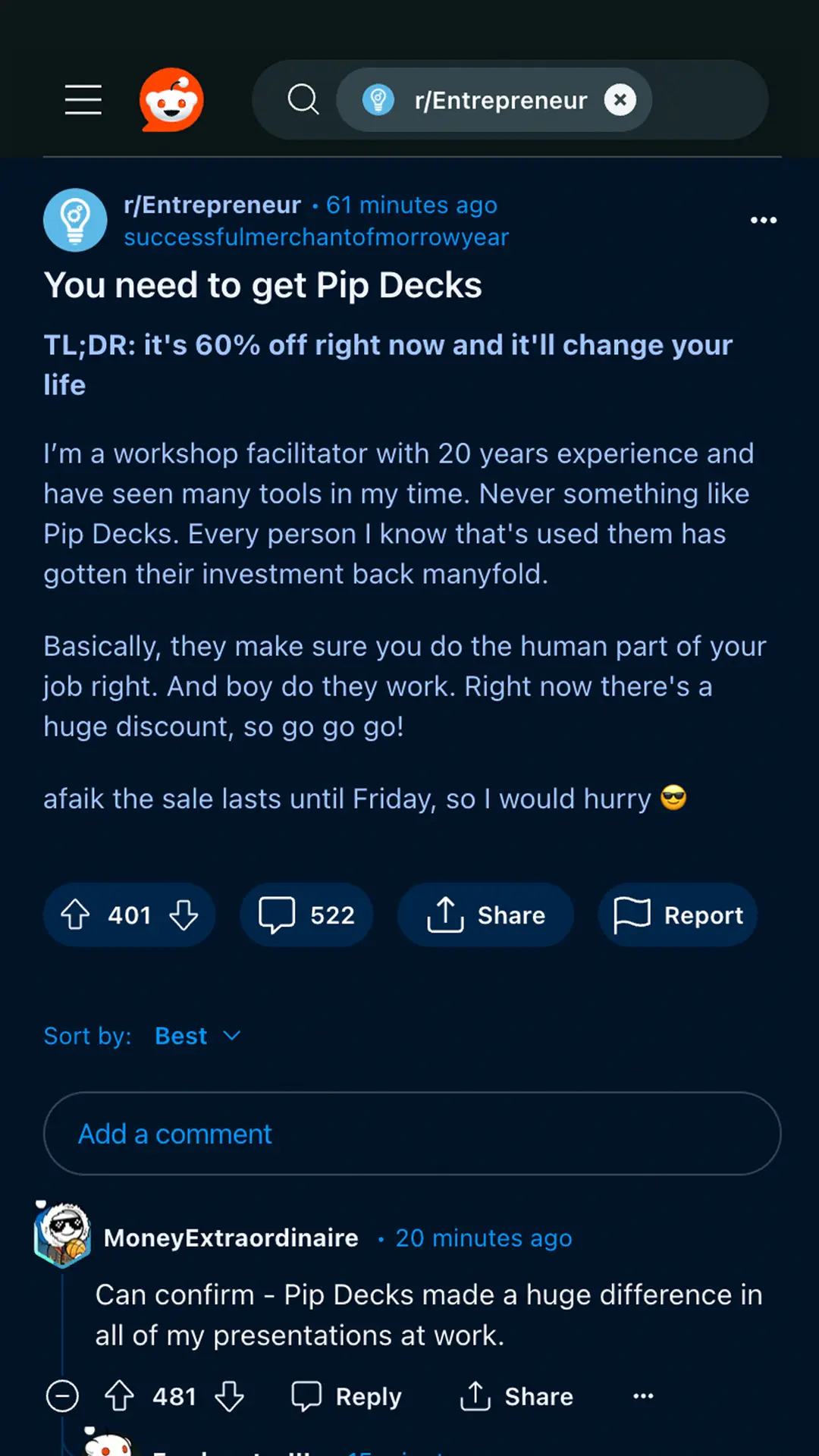
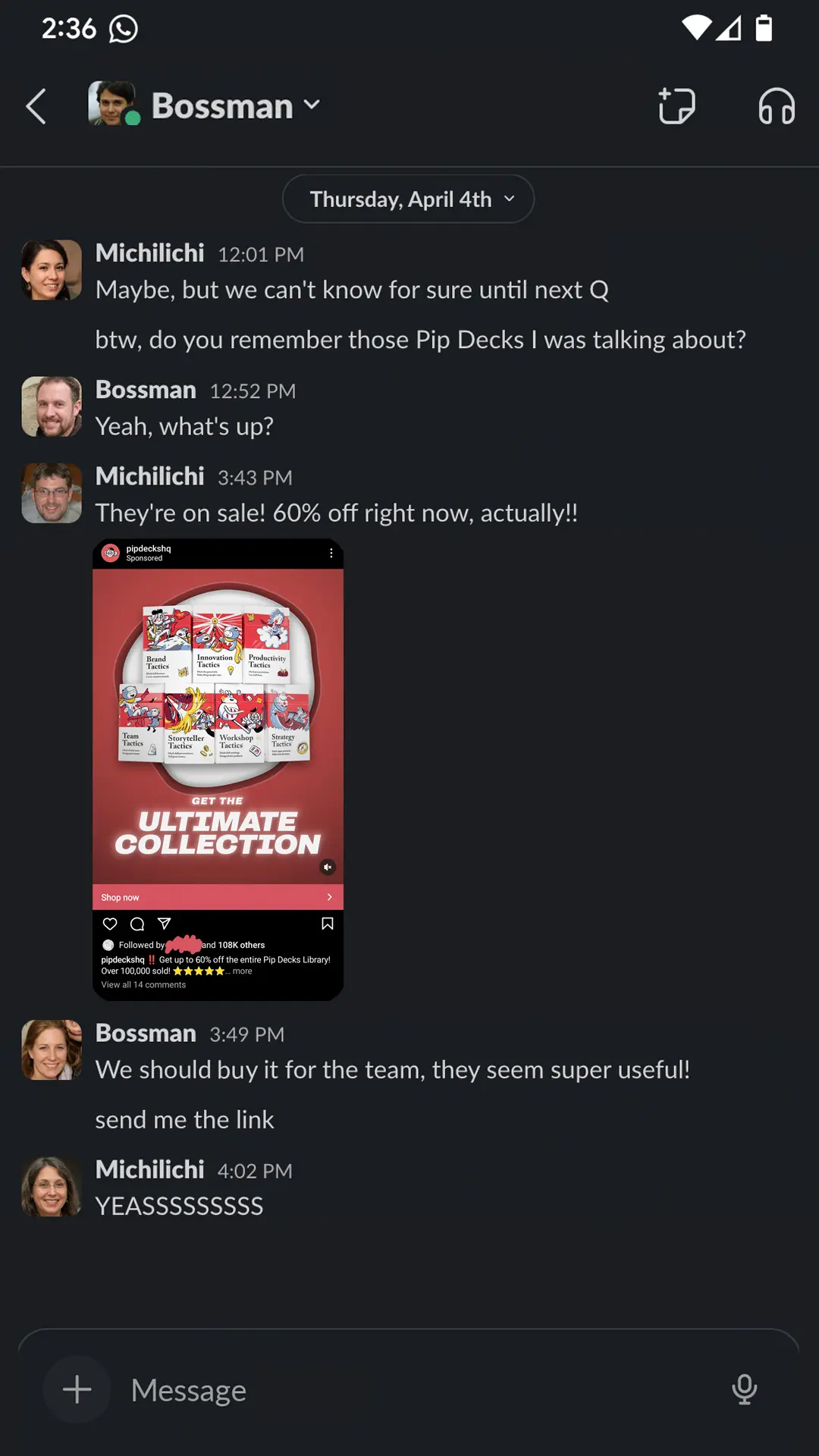
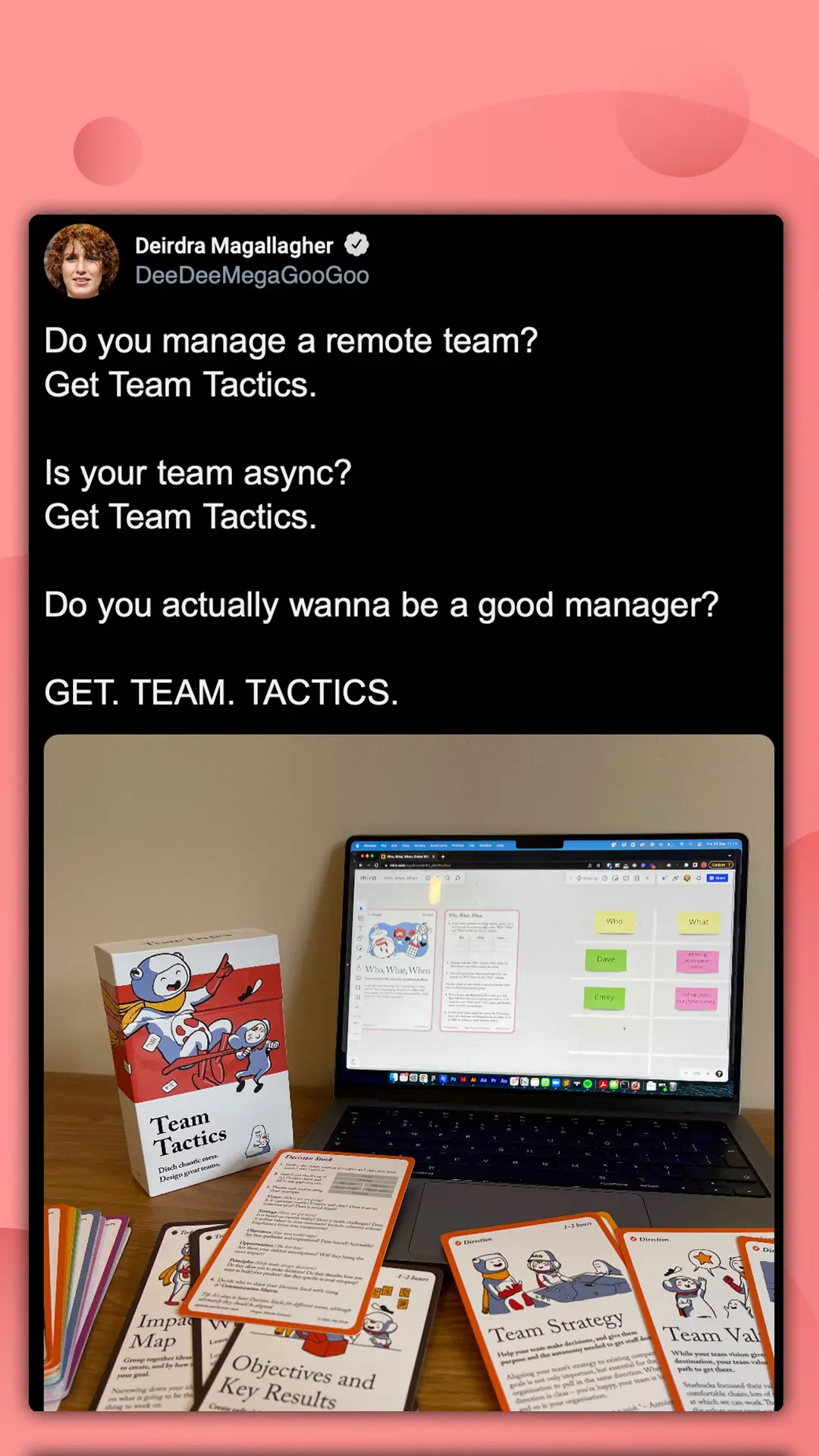
A personal favourite of mine using UI familiarity to our advantage. Because most users will already be familiar with the look of a certain platform, yet do not expect to see it displayed on social media like that, it stops them on their tracks.
And if you're wondering why it's been my favourite: because it was one of the easiest ways to get conversions.
Closing thoughts.
If a lot of this content appears low-quality: feature, not bug. While on the one hand we worked with a variety of sources (testimonials, UGC, studio-shot stuff, etc) we also discovered something extremely valuable: creative that looked like a screenshot, or like it was taken with a selfie camera, performed great.
Of course, there's much to say about brand guardianship. That said, the more content you put out, the more chances you have to get a winner. This meant spreading our efforts across iterations, lo-fi tests and high-effort projects. You never know what will be the winner of the month until you test it.